
Waterproofing
Proper waterproofing is mandatory in any Sydney bathroom to protect against moisture damage.
Other services
Compliance with Australian Standards and NCC
Proper waterproofing is mandatory in any Sydney bathroom renovation to protect against moisture damage and meet Australian regulations. Matini Building adheres strictly to the National Construction Code (NCC) Volume 2 and relevant Australian Standards for internal wet areas. NCC Volume 2 references AS 3740: Waterproofing of domestic wet areas as a Deemed-to-Satisfy solution, meaning we follow AS 3740’s provisions in full to ensure code compliance. All waterproofing membranes we use are tested to AS 4858 standards, which certifies they are suitable for wet-area use. We also integrate AS 3958 guidelines (ceramic tile installation) into our process, ensuring that tiling over the membrane is done correctly without compromising the waterproofing. In New South Wales, waterproofing in bathrooms must be carried out by a licensed professional and documented with a compliance certificate. As a licensed builder, Matini Building provides this assurance. Our approach is factual and by-the-book: every step meets the NCC and Australian Standards to guarantee a durable, leak-free bathroom.
Waterproofing Process: Step-by-Step
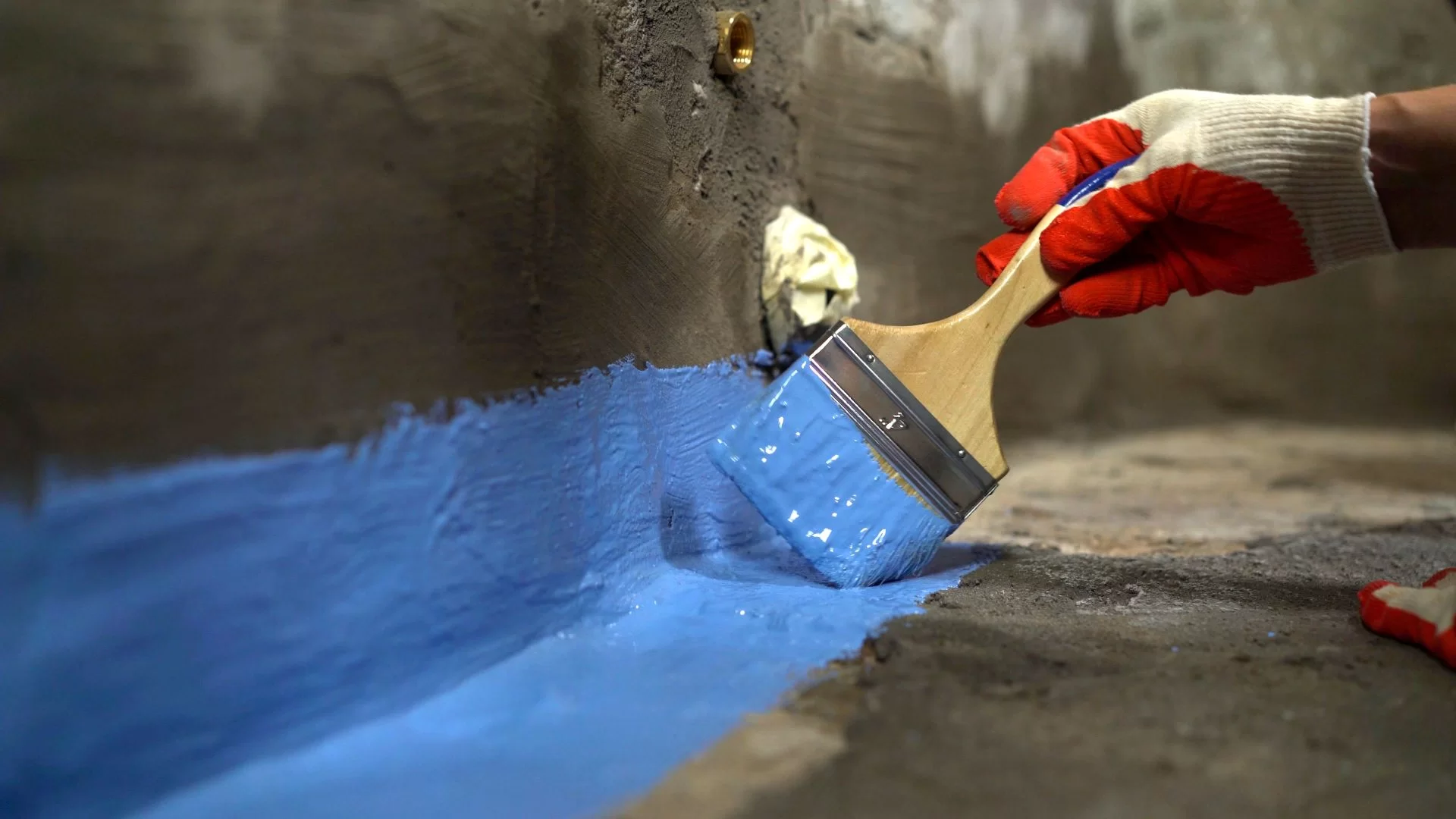
Example: A bathroom under renovation with waterproofing membrane applied to the floor and walls as required by AS 3740.
1. Substrate Preparation
We begin by ensuring the bathroom substrate is suitable and clean. All surfaces must be structurally sound, water-resistant (e.g. concrete, fibre-cement sheeting, water-resistant plasterboard) and compliant with Australian Standards. We remove any dust or debris and make sure the area is dry. Inadequate surface preparation can prevent the membrane from bonding. Any required fall (slope) in the floor is established at this stage so water will drain correctly. Australian guidelines typically require falls of approximately 1:80 to 1:100 toward the drain to avoid ponding.
2. Priming
Before applying the membrane, we prime all substrates with a compatible primer. Priming is essential for adhesion, especially on porous materials. The primer seals the surface and promotes a strong bond between the substrate and the waterproofing membrane. Skipping primer or applying it incorrectly can lead to adhesion failure. We select primers recommended by the membrane manufacturer and suited to the substrate, and allow the correct drying time before proceeding.
3. Membrane Application
We apply a Class III flexible waterproofing membrane compliant with AS 4858. Critical areas are treated first. All wall-to-floor junctions and corners receive a bond breaker before the membrane is applied so the system can accommodate movement without tearing. The membrane is applied in multiple coats to achieve the required thickness.
Waterproofing is extended to all required areas:
Shower floors and walls waterproofed to at least 1800 mm above the floor or 50 mm above the shower rose, whichever is higher
Entire bathroom floors fully waterproofed and graded to the drain
Membranes run up walls around fixtures to approximately 150 mm above the fixture height
All penetrations such as pipes and floor wastes are sealed, with the membrane terminated into the puddle flange at the waste. Each coat is applied evenly without pinholes or gaps.
4. Curing and Inspection
After application, the membrane is left to cure fully in accordance with the manufacturer’s specifications. Proper curing is critical. We allow sufficient time for the membrane to achieve its designed elasticity and adhesion before proceeding.
Once cured, the membrane is inspected for coverage and thickness. Where required, pond testing may be carried out to verify integrity. Any required inspections by certifiers or building inspectors are coordinated before the membrane is concealed. Only after curing and inspection do we proceed to tiling.
5. Tiling and Finishing
Once waterproofing is approved, tiling begins. We use polymer-modified adhesives compatible with the membrane and suited to wet areas. Tiling is carried out in accordance with AS 3958, including correct grout joints and movement joints where required. Falls are maintained in the tile bed so surface water drains correctly. Junctions and penetrations are sealed with flexible silicone after tiling to provide a secondary barrier and accommodate movement.
Upon completion, we provide documentation including a waterproofing compliance certificate confirming the work meets Australian Standards and NSW regulations.
Common Causes of Waterproofing Failure (and How We Prevent Them)
Inadequate Surface Preparation
Dust, moisture or unstable substrates prevent membranes from bonding. We prepare every surface thoroughly before waterproofing begins.
Poor Application or Coverage
Thin membranes, missed corners and incomplete coverage lead to leaks. We apply membranes to the required thickness with full coverage, including all junctions and penetrations.
Insufficient Curing Time
Rushing the process compromises membrane integrity. We allow full curing before tiling or use.
Lack of Bond Breakers at Joints
Without bond breakers, membranes can tear at wall-to-floor junctions due to movement. We install bond breakers at all movement points.
Incorrect Products or Incompatible Systems
Using unsuitable membranes or incompatible primers and adhesives causes failure. We only use certified, compatible systems tested to Australian Standards.
Structural Movement
Unmanaged movement can crack tiles and membranes. We incorporate expansion joints and flexible sealants to accommodate movement.
Damage After Installation
Membranes can be punctured by later works. We coordinate trades carefully and inspect membranes before tiling.
By addressing these failure points at the source, Matini Building delivers waterproofing systems that perform long-term. Our disciplined approach ensures bathrooms are built correctly, compliant with Australian Standards, and protected from hidden moisture damage.