
Jan 2, 2026
Why Large-Format Tiles Fail in Sydney Homes (And How to Avoid It)
What Are Large-Format Tiles?
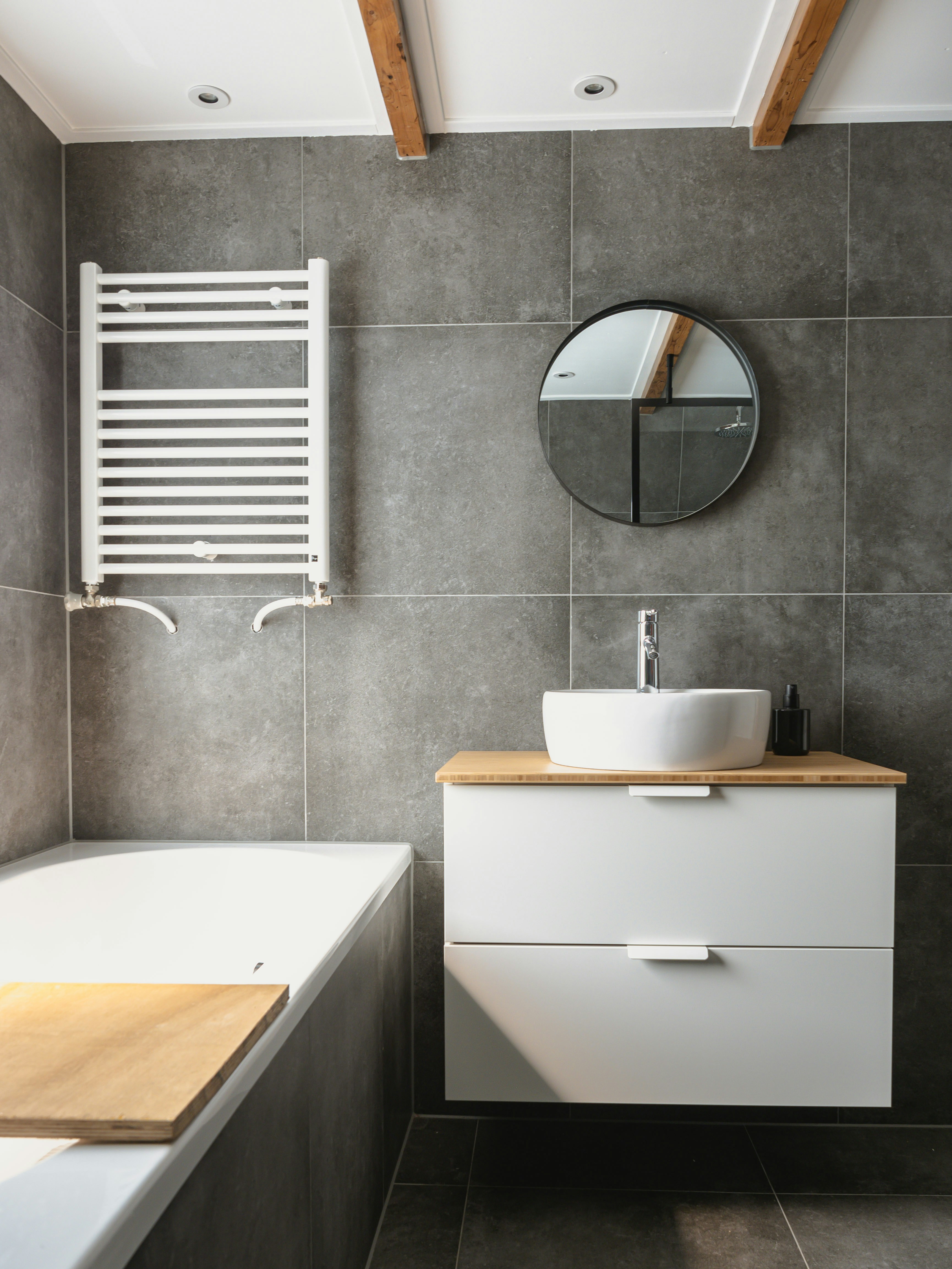
In practical terms, large-format tiles are any tiles where one edge is 600mm or larger.
Common sizes include:
600 × 600
600 × 1200
750 × 1500 and larger
These tiles behave very differently to smaller formats. They’re heavier, less forgiving, and far more sensitive to movement and uneven surfaces, which matters a lot in Sydney homes.
Why Large-Format Tiles Fail So Often in Sydney
1. Most Sydney floors aren’t flat enough
Large-format tiles require near-perfect substrate flatness.
The problem?
Most Sydney homes don’t have it.
Especially in:
Inner West terraces
Older North Shore homes
Renovations and extensions tying new slabs into old structures
Even slight variations in level, the kind that wouldn’t matter with smaller tiles, become obvious with large ones. This leads to:
Lippage (uneven tile edges)
Hollow spots
Cracking over time
If the floor isn’t corrected before tiling, the tiles will show it.
2. Structural movement is underestimated
Sydney renovations often involve movement:
Timber floors
Older concrete slabs
Extensions connecting new and existing structures
Large-format tiles have fewer grout joints, which means less flexibility.
Without proper allowances for:
Expansion joints
Decoupling membranes
Correct sequencing
movement transfers directly into the tile, and eventually, something gives.
3. Bathrooms make everything harder
Bathrooms are already the most demanding environment in the home:
Constant moisture
Temperature changes
Falls to drains
Large-format tiles make achieving proper falls more difficult, not easier, especially in compact Sydney bathrooms.
This is where we see:
Water pooling instead of draining
Forced cuts that look awkward
Slippery floors with poor fall control
In many cases, large tiles are better suited to walls or larger bathrooms, not tight shower zones.
4. Installation skill matters more than the tile
Large-format tiles aren’t forgiving.
They require:
Extremely flat substrates
Correct adhesive coverage (often back-buttering every tile)
Slower, more methodical installation
When tiles are selected without considering how they’ll actually be installed, problems follow.
This is why large-format tiles perform best when they’re part of a builder-led bathroom renovation or interior works project, not a rushed, trade-only install.
Where We See the Most Failures (Sydney-Specific)
Patterns are consistent:
Inner West — uneven floors in older homes
Eastern Suburbs — high-end tiles forced into small bathrooms
North Shore — timber floors without enough stiffening
In almost every case, the issue isn’t the tile.
It’s that the home wasn’t prepared for it.
How to Avoid Large-Format Tile Problems
1. Assess the structure before choosing tiles
Tile size should be decided after:
Subfloor inspection
Structural review
Bathroom layout planning
Not at the showroom.
2. Use large tiles selectively
Large-format tiles work best:
On feature walls
In larger bathrooms
On confirmed flat, stable floors
They’re often a poor choice for:
Small bathrooms
Tight shower areas
Older timber floors
Smaller tiles frequently perform better and age more gracefully in these spaces.
3. Budget for proper preparation
If you want large-format tiles, allow for:
Substrate levelling
Decoupling membranes
Longer installation time
4. Involve a builder early
Most failures happen when:
Tiles are chosen first
Trades are engaged separately
Structural decisions come last
When a licensed builder controls the renovation from the start, tile choices are made with the whole build in mind, not just appearance.
The Honest Builder’s Take
Large-format tiles aren’t bad.
They’re just unforgiving.
In the right conditions, prepared properly, they can look incredible and last for decades. In the wrong conditions, they become a liability, no matter how expensive they were.
The goal isn’t to follow trends.
It’s to build spaces that feel solid, calm, and reliable every day.